
Indian Head Massage
Indian head massage has been practised for over 2,000 years within the Ayurvedic healing tradition, which views health as a balance between mind, body, and spirit.
Key historical points:
- The term Champi comes from the Hindi champna, meaning “to press or knead softly.”
- It was part of everyday life in India — used in homes, passed down through families, and incorporated into barbershop rituals.
- Traditionally, it was used to balance the Vata dosha, which governs movement, the nervous system, and mental activity.
- The head is considered the seat of Prana (life force), so nourishing and stimulating this area was believed to support vitality, clarity, and emotional balance.
This blend of practical grooming and energetic healing is what makes Indian head massage unique
Technique
Indian head massage is usually performed with the recipient seated and fully clothed, making it easy to offer in homes, offices, or wellness centres.
Practitioners typically use:
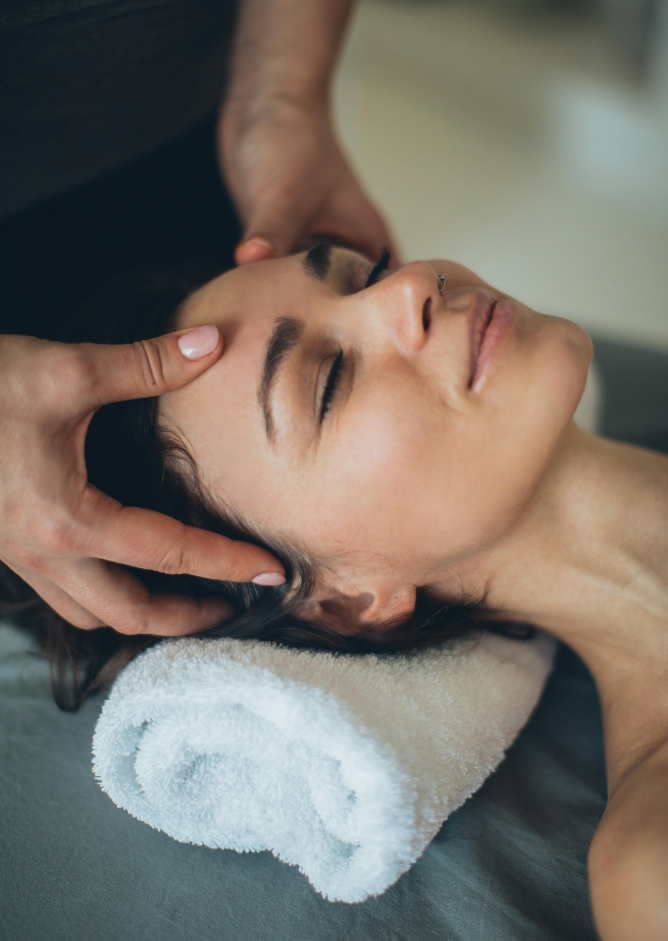
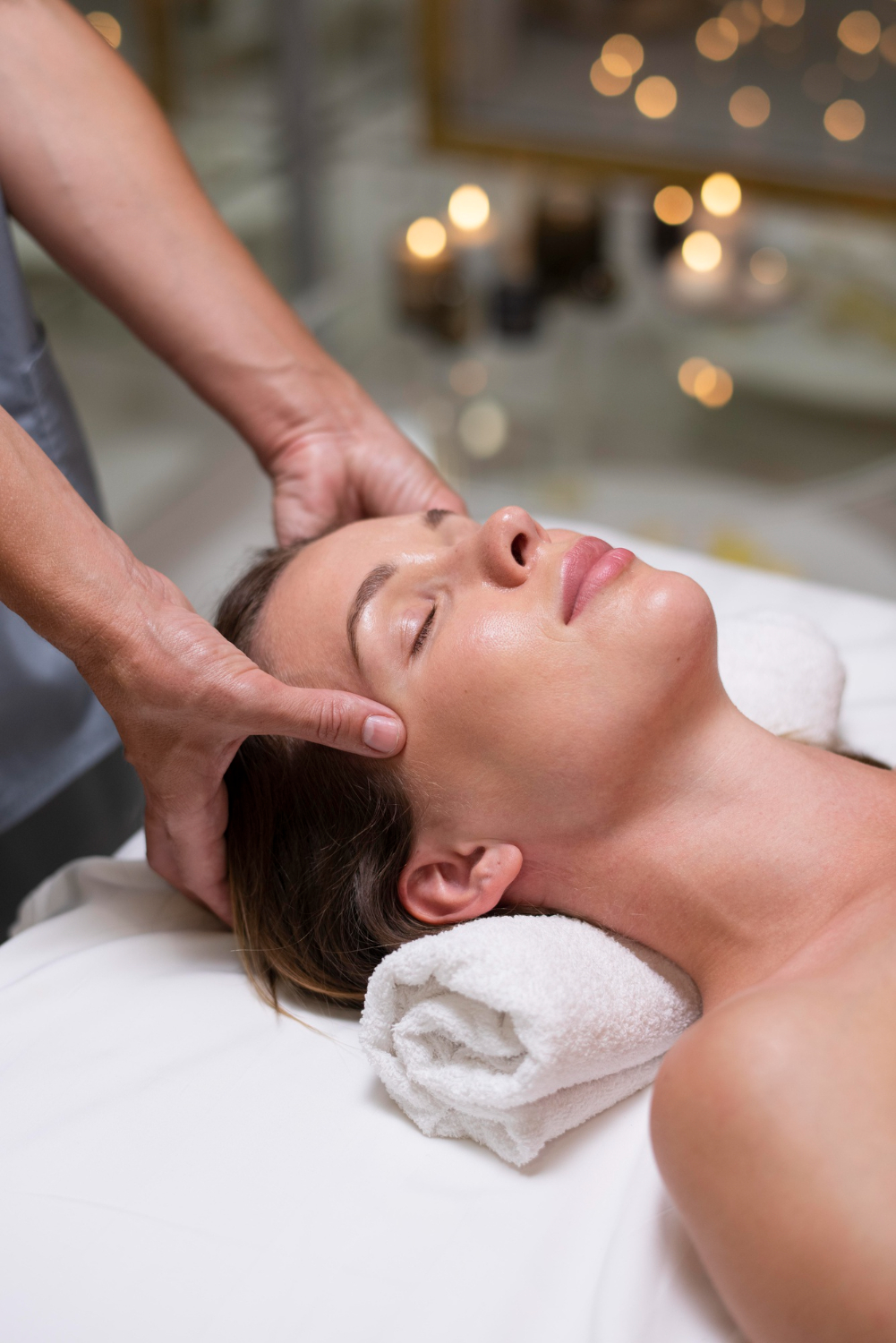
- Circular strokes and acupressure on the scalp, neck, and shoulders
- Gentle kneading and stretching of the upper back and arms
- Herbal oils (optional), chosen according to the person’s Ayurvedic constitution
- Marma point work, stimulating energy points to encourage healing and relaxation
A session lasts 15–45 minutes, beginning at the shoulders and upper back, then moving to the neck, scalp, and sometimes the face and temples
Benefits: Physical, Mental, and Emotional
Indian head massage offers a wide range of scientifically observed and traditionally recognised benefits.